Copyrighted.com Registered & Protected 
KGSO-3ZHC-TTAR-JJIF

Sunday, 23 February 2014

How to get a job at Google


Last June, in an interview with Adam Bryant of The New York Times, Laszlo Bock, the senior vice president of people operations for Google - i.e., the guy in charge of hiring for one of the world's most successful companies - noted that Google had determined that "GPAs are worthless as a criteria for hiring, and test scores are worthless. ... We found that they don't predict anything." He also noted that the "proportion of people without any college education at Google has increased over time" - now as high as 14 percent on some teams. At a time when many people are asking, "How's my kid gonna get a job?" I thought it would be useful to visit Google and hear how Bock would answer. 

Don't get him wrong, Bock begins, "Good grades certainly don't hurt." Many jobs at Google require math, computing and coding skills, so if your good grades truly reflect skills in those areas that you can apply, it would be an advantage. But Google has its eyes on much more. 

"There are five hiring attributes we have across the company," explained Bock. "If it's a technical role, we assess your coding ability, and half the roles in the company are technical roles. For every job, though, the No. 1 thing we look for is general cognitive ability, and it's not IQ. It's learning ability. It's the ability to process on the fly. It's the ability to pull together disparate bits of information. We assess that using structured behavioral interviews that we validate to make sure they're predictive." 

The second, he added, "is leadership - in particular emergent leadership as opposed to traditional leadership. Traditional leadership is, were you president of the chess club? Were you vice president of sales? How quickly did you get there? We don't care. What we care about is, when faced with a problem and you're a member of a team, do you, at the appropriate time, step in and lead. And just as critically, do you step back and stop leading, do you let someone else? Because what's critical to be an effective leader in this environment is you have to be willing to relinquish power." 

What else? Humility and ownership. 

"It's feeling the sense of responsibility, the sense of ownership, to step in," he said, to try to solve any problem - and the humility to step back and embrace the better ideas of others. "Your end goal," explained Bock, "is what can we do together to problem-solve. I've contributed my piece, and then I step back." 

And it is not just humility in creating space for others to contribute, says Bock, it's "intellectual humility. Without humility, you are unable to learn." It is why research shows that many graduates from hotshot business schools plateau. "Successful bright people rarely experience failure, and so they don't learn how to learn from that failure," Bock said. 

"They, instead, commit the fundamental attribution error, which is if something good happens, it's because I'm a genius. If something bad happens, it's because someone's an idiot or I didn't get the resources or the market moved. ... What we've seen is that the people who are the most successful here, who we want to hire, will have a fierce position. They'll argue like hell. They'll be zealots about their point of view. But then you say, 'here's a new fact,' and they'll go, 'Oh, well, that changes things; you're right.'" You need a big ego and small ego in the same person at the same time. 

The least important attribute they look for is "expertise." Said Bock: "If you take somebody who has high cognitive ability, is innately curious, willing to learn and has emergent leadership skills, and you hire them as an HR person or finance person, and they have no content knowledge, and you compare them with someone who's been doing just one thing and is a world expert, the expert will go: 'I've seen this 100 times before; here's what you do.'" Most of the time the nonexpert will come up with the same answer, added Bock, "because most of the time it's not that hard." Sure, once in a while they will mess it up, he said, but once in a while they'll also come up with an answer that is totally new. And there is huge value in that. 

To sum up Bock's approach to hiring: Talent can come in so many different forms and be built in so many nontraditional ways today, hiring officers have to be alive to every one - besides brand-name colleges. Because "when you look at people who don't go to school and make their way in the world, those are exceptional human beings. And we should do everything we can to find those people." Too many colleges, he added, "don't deliver on what they promise. You generate a ton of debt, you don't learn the most useful things for your life. It's [just] an extended adolescence." 

Google attracts so much talent it can afford to look beyond traditional metrics, like GPA. For most young people, though, going to college and doing well is still the best way to master the tools needed for many careers. But Bock is saying something important to them, too: Beware. Your degree is not a proxy for your ability to do any job. The world only cares about - and pays off on - what you can do with what you know (and it doesn't care how you learned it). And in an age when innovation is increasingly a group endeavor, it also cares about a lot of soft skills - leadership, humility, collaboration, adaptability and loving to learn and re-learn. This will be true no matter where you go to work.

WhatsApp? Service down, three days after Facebook deal


WhatsApp's 450 million worldwide users were unable to access the smartphone free-messaging service for several hours on Saturday, three days after Facebook declared it was lavishing up to $19 billion on it.

"Sorry we currently experiencing server issues. We hope to be back up and recovered shortly," WhatsApp said in a message on Twitter that was retweeted more than 25,000 times in just a few hours and provoked ridicule because it comes so soon after Facebook's hefty acquisition.

Some WhatsApp users found they were unable to connect to the app, while others complained their messages were not going through.

WhatsApp did not say how long the outage lasted, but about 2.5 hours later it tweeted again to say: "WhatsApp service has been restored. We are sorry for the downtime..."

The specialist website techcrunch.com suggested the problem might be down to "a surge of signups and usage that has overloaded its servers" after the publicity the app garnered following Facebook's announcement on Wednesday.

Facebook is betting huge on mobile with the eye-popping cash-and-stock deal for WhatsApp, which was only started five years ago but has quickly grown as a free alternative to text messages.

It is Facebook's biggest acquisition and comes less than two years after the California-based Internet star raised $16 billion in the richest tech sector public stock offering.

Neither WhatsApp nor Facebook were immediately available for comment. 

However, the outage was the source of much amusement -- as well as anger -- on Twitter. 

"I expect you are all away from your desks on the ales drinking some of that Facebook cash!" one user, "leonclarance," replied to WhatsApp's tweet about the blackout.

Another simply tweeted: "Turn down Facebook's offer guys!" 

Friday, 21 February 2014

BEWARE...Stores can track where you go, using your smartphone


Should shoppers turn off their smartphones when they hit the mall? Or does having them on lead to better sales or shorter lines at the cash register?

Retailers are using mobile-based technology to track shoppers' movements at some malls and stores. The companies collecting the information say it's anonymous, can't be traced to a specific person and no one should worry about invasion of privacy. But consumer advocates aren't convinced. It's spying, they say, and shoppers should be informed their phones are being observed and then be able to choose whether to allow it.

The Federal Trade Commission held a workshop Wednesday on the issue, part of a series of privacy seminars looking at emerging technologies and the impact on consumers. FTC attorney Amanda Koulousias says the commission wants to better understand how companies are using phone-location technology, how robust privacy controls are and whether shoppers are notified in advance.

Here's how the technology works:


Your smartphone has a unique identifier code - a MAC address - for Wi-Fi and Bluetooth. It's a 12-character string of letters and numbers. Think of it like a Social Security or vehicle identification number, but this address is not linked to personal information, like your name, email address or phone number. The numbers and letters link only to a specific phone.

When your smartphone is turned on, it sends out signals with that MAC address (for media access control) as it searches for Wi-Fi or Bluetooth. Those signals can also be captured by sensors in stores that could tell a department store how often shoppers visit, how long they stay, whether they spend more time in the shoe department, children's clothing section or sporting goods, or whether they stop for the window display, take a pass and decide to move on.

Companies that provide "mobile location analytics" to retailers, grocery stores, airports, and others say they capture the MAC addresses of shoppers' phones but then scramble them into different sets of numbers and letters to conceal the original addresses - a process called hashing. This is how they make the data they collect anonymous, they say.

The companies then analyze all the information those hashed numbers provide as shoppers move from store to store in a mall, or department to department in a store. Mall managers could learn which stores are popular and which ones aren't. A retailer could learn how long the lines are at a certain cash register, how long people have to wait - or whether more people visit on "sale" days at a store.

"We're in the business of helping brick and mortar retailers compete" with online retailers, said Jim Riesenbach, CEO of California-based iInside, a mobile location analytics company. "The retailers want to do the right thing because they know that if they violate the trust of consumers, there will be a backlash."

West Virginia pizza worker caught urinating in sink fired


 A West Virginia pizza restaurant has been shut down after a district manager was caught on surveillance video urinating into a sink.

Pizza Hut Corp. spokesman Doug Terfehr says the company was made aware of the video on Tuesday, fired the employee shortly thereafter and the restaurant in Kermit, about 85 miles southwest of Charleston, was then closed indefinitely.

The video dated January 29 shows the manager urinating in a sink in the kitchen.

In a statement, the company says it was "embarrassed" by the actions and has "zero tolerance" for violations of its operating standards. The incident occurred after business hours.

Mingo County health official Brett Vance says the company is overseeing the restaurant's cleaning.

The video and firing were first reported by WOWK-TV.

Fine-tuning has limits; it's time to create


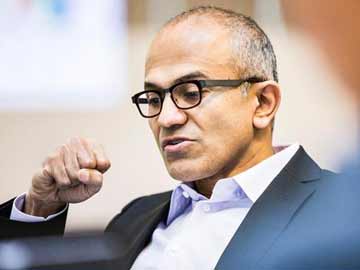
When Microsoft tapped Satya Nadella as its third chief executive, the technology giant turned to a longtime engineering executive and company insider. He takes over at a critical time, as Microsoft grapples with both strategic and cultural challenges. In his first interview as CEO, Nadella, just weeks into his job, talks about leadership lessons from his predecessors, his management style and fostering innovation. This interview has been edited and condensed. 

Q: What leadership lessons have you learned from your predecessor, Steve Ballmer? 

A: The most important one I learned from Steve happened two or three annual reviews ago. I sat down with him, and I remember asking him: "What do you think? How am I doing?" Then he said: "Look, you will know it, I will know it, and it will be in the air. So you don't have to ask me, 'How am I doing?' At your level, it's going to be fairly implicit." 

I went on to ask him, "How do I compare to the people who had my role before me?" And Steve said: "Who cares? The context is so different. The only thing that matters to me is what you do with the cards you've been dealt now. I want you to stay focused on that, versus trying to do this comparative benchmark." The lesson was that you have to stay grounded, and to be brutally honest with yourself on where you stand. 

Q: And what about Bill Gates? 

A: Bill is the most analytically rigorous person. He's always very well prepared, and in the first five seconds of a meeting he'll find some logical flaw in something I've shown him. I'll wonder, how can it be that I pour in all this energy and still I didn't see something? In the beginning, I used to say, "I'm really intimidated by him." But he's actually quite grounded. You can push back on him. He'll argue with you vigorously for a couple of minutes, and then he'll be the first person to say, "Oh, you're right." Both Bill and Steve share this. They pressure-test you. They test your conviction. 

Q: There's a lot of curiosity around what kind of role Bill is going to play with you. 

A: The outside world looks at it and says, "Whoa, this is some new thing." But we've worked closely for about nine years now. So I'm very comfortable with this, and I asked for a real allocation of his time. He is in fact making some pretty hard trade-offs to say, "OK, I'll put more energy into this." And one of the fantastic things that only Bill can do inside this campus is to get everybody energized to bring their A-game. It's just a gift. 

Q: What were some early leadership lessons for you? 

A: I played on my school's cricket team, and there was one incident that just was very stunning to me. I was a bowler - like a pitcher in baseball - and I was throwing very ordinary stuff one day. So the captain took over from me and got the team a breakthrough, and then he let me take over again. 

I never asked him why he did that, but my impression is that he knew he would destroy my confidence if he didn't put me back in. And I went on to take a lot more wickets after that. It was a subtle, important leadership lesson about when to intervene and when to build the confidence of the team. I think that is perhaps the No. 1 thing that leaders have to do: to bolster the confidence of the people you're leading. 

Q: Tell me about your management approach in your new role. 

A: The thing I'm most focused on today is, how am I maximizing the effectiveness of the leadership team, and what am I doing to nurture it? A lot of people on the team were my peers, and I worked for some of them in the past. The framing for me is all about getting people to commit and engage in an authentic way, and for us to feel that energy as a team. 

I'm not evaluating them on what they say individually. None of them would be on this team if they didn't have some fantastic attributes. I'm only evaluating us collectively as a team. Are we able to authentically communicate, and are we able to build on each person's capabilities to the benefit of our organization? 

Q: Your company has acknowledged that it needs to create much more of a unified "one Microsoft" culture. How are you going to do that? 

A: One thing we've talked a lot about, even in the first leadership meeting, was, what's the purpose of our leadership team? The framework we came up with is the notion that our purpose is to bring clarity, alignment and intensity. What is it that we want to get done? Are we aligned in order to be able to get it done? And are we pursuing that with intensity? That's really the job. 

Culturally, I think we have operated as if we had the formula figured out, and it was all about optimizing, in its various constituent parts, the formula. Now it is about discovering the new formula. So the question is: How do we take the intellectual capital of 130,000 people and innovate where none of the category definitions of the past will matter? Any organizational structure you have today is irrelevant because no competition or innovation is going to respect those boundaries. Everything now is going to have to be much more compressed in terms of both cycle times and response times. 

So how do you create that self-organizing capability to drive innovation and be focused? And the high-tech business is perhaps one of the toughest ones, because something can be a real failure until it's not. It's just an absolute dud until it's a hit. So you have to be able to sense those early indicators of success, and the leadership has to really lean in and not let things die on the vine. When you have a $70 billion business, something that's $1 million can feel irrelevant. But that $1 million business might be the most relevant thing we are doing. 

To me, that is perhaps the big culture change - recognizing innovation and fostering its growth. It's not going to come because of an org chart or the organizational boundaries. Most people have a very strong sense of organizational ownership, but I think what people have to own is an innovation agenda, and everything is shared in terms of the implementation. 

Q: How do you hire? 

A: I do a kind of 360 review. I will ask the individual to tell me what their manager would say about them, what their peers would say about them, what their direct reports would say about them, and in some cases what their customers or partners may say about them. That particular line of questioning leads into fantastic threads, and I've found that to be a great one for understanding their self-awareness. 

I also ask: What are you most proud of? Tell me where you feel you've set some standard, and you look back on it and say, "Wow, I really did that." And then, what's the thing that you regret the most, where you felt like you didn't do your best work? How do you reflect on it? 

Those two lines of questioning help me a lot in terms of being able to figure people out. I fundamentally believe that if you are not self-aware, you're not learning. And if you're not learning, you're not going to do useful things in the future. 

Q: What might somebody say in a meeting that, to you, sounds like nails on a chalkboard? 

A: One of the things that drives me crazy is anyone who comes in from the outside and says, "This is how we used to do it." Or if somebody who's been here for a while says, "This is how we do it." Both of them are such dangerous traps. The question is: How do you take all of that valuable experience and apply it to the current context and raise standards? 

Q: Any final big-picture thoughts on how you're going to approach your new role? 

A: Longevity in this business is about being able to reinvent yourself or invent the future. In our case, given 39 years of success, it's more about reinvention. We've had great successes, but our future is not about our past success. It's going to be about whether we will invent things that are really going to drive our future. 

One of the things that I'm fascinated about generally is the rise and fall of everything, from civilizations to families to companies. We all know the mortality of companies is less than human beings. There are very few examples of even 100-year-old companies. For us to be a 100-year-old company where people find deep meaning at work, that's the quest.