
Get Updated


Wednesday, 27 May 2015
Tuesday, 19 May 2015
#ModiInsultsIndia Trending
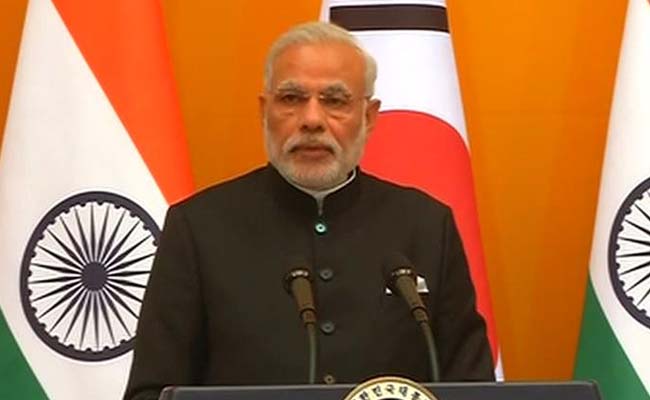
#ModiInsultsIndia is top trending on Twitter since Tuesday morning amid much anger on the social media site over Prime Minster Narendra Modi's comments in speeches he made in Shanghai and Seoul.
The PM had said in Shanghai, China, on Saturday, "Earlier, you felt ashamed of being born Indian. Now you feel proud to represent the country. Indians abroad had all hoped for a change in government last year."
Saturday, May 16, was the first anniversary of the spectacular victory that PM Modi and his BJP posted in the national elections.
In Seoul, South Korea, he said yesterday, "There was a time when people used to say we don't know what sins we committed in our past life that we were born in Hindustan. Is this any country, is this any government...we will leave."
In both cities the PM was addressing receptions hosted by the Indian community during his three-nation foreign tour.
The hashtag is at the top of India trends on Twitter with nearly 70,000 tweets around it. It has also climbed to number two on worldwide trends as many sought to remind the PM that their pride in being Indian has nothing to do with which political party is in power.
Monday, 18 May 2015
My Child Can Be Pole Dancer, But Not Doctor

In what many would accept as a startling aberration among Indian parents, a father, who is a doctor, has said he would rather his child choose any profession -including pole doctor- over following in his footsteps.
In a blog post titled, 'Why I will never allow my child to become a Doctor in India', Dr Roshan Radhakrishnan, an anaesthesiologist in Kerala, offers plenty of reasons in commandments with titles like "Thou shalt sacrifice your time, parents, spouse and child."
But there's a lot of serious material offered.
"I wish it were JUST about losing your family life, working twice the allotted hours and taking home the pitiably disproportionate salary though. But sadly, it isn't even that anymore. Now, it is about getting home in one piece. From stopping patients from dying, the medical field is now being forced to worry about not being killed by the patients bystanders," he writes.
The blog was posted on May 15 and has gone viral on social media. It has been shared nearly 20,000 times on Facebook
"Are you willing to die for your profession?" he asks, citing "The Indian Medical Association confirmed in May 2015 that over 75% of the doctors in India have faced some form of violence at the patient's hands in India. 75%."
He ends with this, "You will have every opportunity to choose whether you want to retain your religion or change it ...you will have every opportunity to choose the love of your life irrespective of caste, creed or even gender...you can be a wildlife photographer trekking through the Amazons or dance the poles at Las Vegas. But I will never allow you to become a doctor in India. Because I did not raise my child for two decades just to watch her lose her sense of right and wrong, of humanity or worse, watch her die. And I don't mean just physically."
Dr Radhakrishnan says he has also asked other doctors to talk about their experience in the profession and what is going wrong in India. The post has already generated 130 comments.

Wednesday, 13 May 2015
How to Prevent a Stroke in Middle Age
 |
| The number of people having a stroke in their 40s and 50s has risen dramatically. So how can you minimise the risk of it happening to you? |
1. Don’t kid yourself it’s too late to quit smoking
Smoking furs up your arteries, increasing the chance of a blood clot, and makes you more likely to develop high blood pressure – the biggest risk factor for stroke. What if I’m in my 40s and have been doing it for 20 years or so, you might ask – haven’t I missed the chance to reverse the damage? “Absolutely not,” says Professor Peter Rothwell, head of Oxford University’s stroke prevention unit. “There’s been a lot of work done on that which shows convincingly that once you stop smoking, the excess risk of death due to smoking has pretty much disappeared after 10 years – but that well before that the risk of stroke and heart attack start to drop as well. Even people who stop smoking in their 60s and 70s can eventually detect a benefit, and for people in their 30s and 40s the benefit is substantial.”
2. Don’t fixate on how many calories you burn
Exercise is key to stroke prevention, helping to lower blood pressure and aiding weight loss. Official advice is to aim to build up to 30 minutes, five times a week. But if you’re just starting to get active, sessions on the treadmill can seem depressingly slow to clock up results. You’ve got to remember the benefits are much greater than the numbers on the display, says Rothwell. “If you’ve been running for half an hour and you’ve burned 50 calories – about a quarter of a Kit Kat – that sounds disheartening,” he explains. “But what happens when you exercise is that you reset your baseline metabolic rate, so that you’re actually burning more calories the rest of the time.”
3. Don’t beat yourself up if you don’t stick to a planned exercise regime
If you make a plan to go for a brisk half-hour walk every day and then miss a few days, don’t think you’ve failed and give up entirely. “You don’t lose the benefits of exercise by stopping for a short time,” Rothwell says. And don’t be daunted by the 30-minutes, five-times-a-week guideline, either – it’s a recommendation. “It isn’t an all-or-nothing thing,” he says. “Doing a little bit of exercise is better than none and doing a bit more is better than a bit less.”
4. Stock up on herbs and spices and make your own bread
When it comes to diet, reducing your intake of salt – another cause of high blood pressure – is without a doubt the most important change you can make, says Professor Tony Rudd, NHS England’s national clinical director for stroke. Fear you’ll be waving goodbye to flavour? Get used to seasoning your food with herbs, spices and black pepper instead. And be aware that bread is one of the biggest sources of salt in our diets. Rudd advises his patients to invest £100 in a breadmaker, so they can control the amount of salt that goes into each loaf. “Our bodies were evolved to eat hunter-gatherer-type foods, which didn’t include spreading salt all over chips,” he adds.
5. Eat off smaller plates – and don’t skip breakfast
Research shows that being obese increases the chances of having a stroke related to a blood clot by 64%, so cutting down on high-fat foods, eating more fibre and getting yourfive fruit and veg a day can all help reduce stroke risk. Having breakfast will make you feel healthier and stop you snacking during the day, the Stroke Association points out. Top your cereal or porridge with some fruit and that’s one of your five a day covered. Other tips include keeping a food diary to keep track of what you’re really eating and using smaller dishes to cut control portion sizes. “If you want to lose weight it’s a question of not taking seconds, cutting 20% off your normal plate size, and being disciplined about it,” Rudd says.
6. Spread your drinking out over the week
Binge drinking can cause surges in blood pressure that greatly increase your stroke risk. NHS guidelines currently say men should stick to three or four units a day and women should have no more than two or three units a day. (That’s 28 and 21 units respectively over the course of a week, though Rudd thinks those figures should be 21 and 14.) “The important thing is not to drink it all in one go, or even just split it between Friday and Saturday,” he says. “Always make sure you hydrate before you start drinking so you’re not drinking to quench your thirst. Start off with a few soft drinks, or water.”
7. Monitor your blood pressure
Women tend to get their blood pressure monitored throughout their adult lives – things like going on the pill, getting pregnant or starting HRT all mean regular checks. But men can get to their 60s without having it checked for decades, especially as high blood pressure often doesn’t come with symptoms. You can get your GP to do it, but Rothwell suggests the easiest route can be to simply buy a blood pressure monitor from your local pharmacy (at a cost of around £10 or £15) and check it yourself every few weeks.
8. Don’t be scared to seek help for stress and depression
Although the cause-and-effect relationship between stress or depression and stroke isn’t clear, these mental-health conditions do seem to act as markers, Rothwell explains. People with depression are about twice as likely to have a stroke. Make sure you’re seeing your doctor about any other conditions you may have that increase the risk of stroke, including heart disease, diabetes, high cholesterol and irregular heartbeat.
9. Avoid recreational drugs
Subscribe to:
Posts (Atom)